First Blog Post

Hello everyone! My name is Amaryllis, but I don’t like my government name, so I prefer to be called Lily. My grandmother disliked my name since the day that I was born and came up with my nickname from the letters of my actual name (thanks, mom). My hobbies include reading, writing, discovering new music, cooking, and shopping. I was born in Springfield, Massachusetts but spent half of my life in St. Croix and Tampa. There’s a spectrum of careers that spark my interest, some of which are becoming a travel writer, columnist, journalist, social media specialist, web content writer, or freelancer. In this blog, I want to discuss different topics such as music, movies, food, psychological health, and my opinions on issues regarding technology, social media, and politics. There’s a constant stream of thoughts circulating through my brain, itching to be written down. In this class, I am determined to sharpen my writing skills, and the way I express myself to my readers. I am also eager to read what everyone else has to say. Thank you for reading!
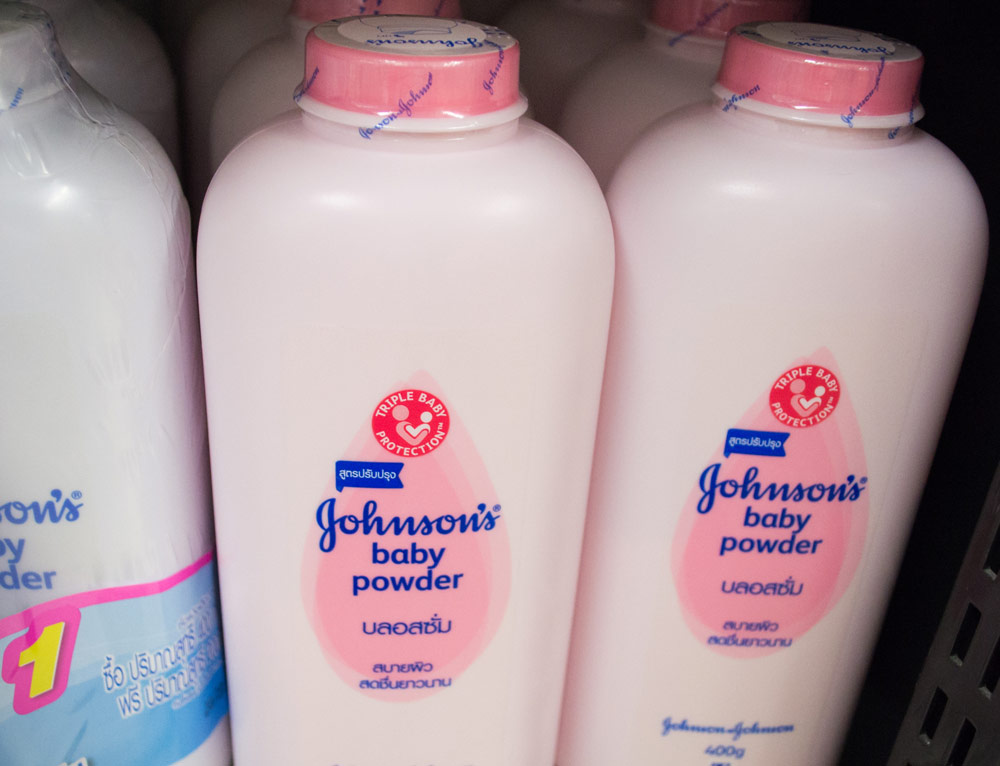
130 Years of Trust Down the Toilet

Image result for johnson baby powder

For as long as I can remember, Johnson and Johnson was a favorably trusted brand used in the form of medicine, lotions, powders, food, and formulas on newborns, toddlers, and children. Asbestos, a carcinogen causing mesothelioma was found in a Johnson and Johnson baby powder. As a result of these products allegedly causing cancer, the company is facing thousands of lawsuits. Eerily enough, Johnson and Johnson manufactures products that go way beyond baby powder and other newborn essentials. This company also co-created and partnered with the brains that brought you Band-Aid bandages, Tylenol medications, Neutrogena skin and beauty products, Clean and Clear facial wash, and Acuvue contact lenses. Along with the baby powder, Tylenol has also experienced its share of recalls as well. In this story, I will dive deeper into the hidden dangers of the talc infused baby powder along with the many health risks and consequences Johnson and Johnson might have to face.

Newsy

Newsy is a uniquely crafted news site that gives the reader access to not only articles, but to documentaries, shows, live broadcasts, and investigations. The news section is categorized into 8 different topics which are U.S. News, World, Politics, Science/Health, Tech, Business, Entertainment, and Sports. These categories make it easy for the reader to properly navigate through the site to find whatever they’re looking for. Each story has a video summarizing information in under 2 or 3 minutes, also providing the reader with a transcript on the information including links and citations. Newsy believes in giving quality and non-bias content for the reader to be educated on without the pressure of being influenced. Some intriguing stories that I’ve read on Newsy are titled ‘Over 2 Million Pounds of Chicken Recalled In 8 States’ (yikes) ‘CDC Investigating Salmonella Outbreak Across 6 States’ and ‘Report: U.S. Air Pollution Is Getting Worse’. I enjoy Newsy because they seem to mainly focus on cut-throat news that is vital for society to know and understand.

Hyperlocal Journalism

Hyperlocal journalism tends to cover local topics and events on an extremely small geographical scale. This type of journalism has a lot in common with citizen journalism. They generally focus on stories such as local sports, crimes, sales, and neighborhood activities in a specific city. Hyperlocal journalism is mostly found online to avoid printing costs. These local sites are trying to bring relevancy to topics that larger news channel avoid. Unfortunately, hyperlocal sites have small, co-dependent budgets.

However, a recent research study by Arizona State University professor Monica Chandha shows that hyperlocal come in various forms, some expanding their growth with 20 or more employees. These forms tend to operate in the way that regular journalists do. The term “hyperlocal” has been used over the years, but as times progressed, the term for community based news is now referred to as “local.”

Some other facts from Chanda’s studies are that banner ads/grants are essential to hyperlocal revenue, staff are educated and younger, and non-profit hyperlocal covers news differently that for-profits.

Hyperlocal news gives a more personal and connective touch for the community, tackling tasks at hand that are necessary for growth. Since this form of news is heavily audience based, outside sources can grow a fresh perspective on how audiences react to the content that’s given on these community sites.

Getting ready for Spooky Season

The Humane Society is getting ready to further expand their organization by 2022
Pumpkins are a staple accent for fall
The Humane Society of Tampa Bay has pumpkin patches located at their shelter and Hyde Park Cafe
Purchase one of these pumpkins so it can go to a good cause!
This development will further strengthen the vision and mission of The Humane Society of Tampa Bay
These cute kittens are up for adoptions! Adoption fee: 50 dollars, with shots included!

Service Journalism

This service journalism assignment seems easy but there’s so many different routes you can take. I’m in between doing a historical piece, research study, or personality profile. If I choose writing on historical pieces, I would pick someplace in Ybor City or the Watmongkolrata Temple. The Watmongkolrata Temple is rich in history and serves as not only a sanctuary but as a vendor for delicious Thai Food and other items. For the personality profile, I think it would be interesting to interview a cop and their K-9 units and ask about their daily routine and the challenges they face. For research study, I’d choose a controversial (probably crime) story that has impacted us as a society.

Who is seeing our personal information?

undefinedDon’t you hate it when you receive those pestering Facebook messages such as “Is this you????” or “GET THE NEWEST IPHONE NOW JUST PAY SHIPPING AND HANDLING!”? well, so do I. Small and fixable cyber-attacks are unsettling but nevertheless forgettable with time. But what happens when your bank information, social security, and address gets leaked, consequentially becoming accessible online for anyone to use and abuse? We are all undeniably connected to our electronics, especially college students and children/adolescents. It is fundamental that we can identify the common cyber-attacks we face and how to avoid becoming a victim.
Aside from password and malware attacks, we have lost millions upon millions of personal information in data breaches. According to Fox Business, over the last couple of years, there has been a staggering collection of data breaches in well-known corporations. Some of these businesses are Facebook, Macy’s, Equifax, Panera Bread (I love this place!), Under Armour, eBay, Forever 21, and Uber. Unfortunately, since the majority of us can’t hack like a black hat, situations like this are a little out of our control. Some essential things to keep in mind to prevent getting hacked is encrypting your data, installing anti-virus software, using strong passwords, being wary of public Wi-Fi, etc.

To further educate myself on this topic, I would like to interview someone who works in cyber-security. Some questions I’d ask are; What are some significantly different ways that we can keep ourselves safe online? Who is hacking these businesses? If this persists, what do you estimate will happen in the future of technology? How does artificial intelligence assist cyber-security? Do you believe that the ongoing situation of data breaches is being ignored? If so, why? What should be implemented in improve the situation?   

The nauseating pre-interview jitters

Image result for interview time

Going into this interview, I tried to be as concise and professional as possible. I re-read all of my neat stack of questions constantly, going through a frustrating process of elimination on questions that seemed close-ended. It took me awhile to decide who I wanted to interview. I wanted it to be interesting and out of the box. I enjoy creating stories that fabricate an unsettling cringe factor towards the reader. I’ve been obsessing over Grey’s Anatomy lately, so I knew I wanted my interviewee to be in the medical field. I searched and dived through the various careers and narrowed my choice down to emergency nurses or pathologists. I settled on a pathologist because there seemed to be no nurses available to speak with.

I met Danielle Ryan at my serving job. She seemed to be very sweet and we talked about our aspirations and what her career was. When she told me that she is a medical student that works on cadavers, I jumped at the opportunity. A couple of days later, we met up at the local Starbucks near the University of South Florida.

 I meticulously planned my outfit, picking muted colors that wouldn’t bring any unnecessary attention. I wore a light gray long sleeve blouse and a black pencil skirt, and alongside me was a crisp new journal used specifically for interviewing and my favorite ink pen. Her energy was inviting and comforting, so any type of anxiousness shifted to a complete stop. The interview was short and sweet since she did me a favor by meeting me on her lunch break. She wore scrubs and sipped on a Chai tea, answering questions with ease or recalling a funny memory.

Although my anxiety wavered, the interview had its issues. She strayed off topic… a lot. It was hard to bring her back to an important question without seeming pushy or rude. I followed some of the notes I jotted down in class that advised me to let the conversation naturally fizzle, eventually resorting back to the question eventually. I tried keeping everything light, and it seemed to have worked.

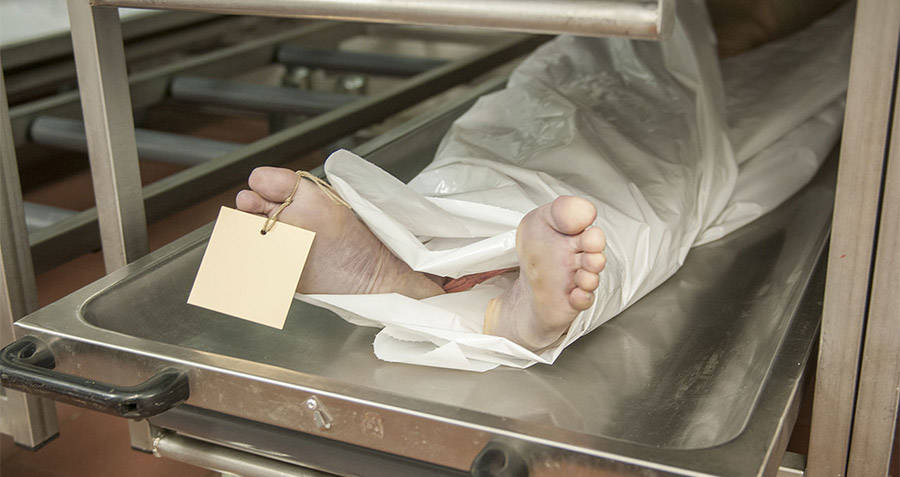
The Secret Life of an American Cadaver

Death is a tragic and undeniable part of every human’s life. What happens to our conscious entity is unknown, and another question we should put into consideration is this: What even happens to our bodies when we die? Surprisingly enough, there’s an abundance of things that your body can potentially experience instead of rotting into nothingness 6 feet under.

Here are some unexpected (and unsettling) things you can do with your body after you die:

  1. Cremation (which can be used in jewelry, vinyl records, photo frames, etc.)
  2. Donate to a body farm for forensic anthropology research
  3. Donate to the Mayo Clinic
  4. Donate to science (medical education, scientific research, or organ donation to improve the lives of others, etc.)

In my story, the focal point will be on human cadavers, and what it’s like working with them.

Questions that will be asked to the interviewee:

  1. What sparked your interest in this career field?
  2. What’s your normal work routine?
  3. What is the most challenging task in your career in relation to dissecting?
  4. Can you briefly describe the sight and smell of cadavers during dissection?
  5. Do you run into any health risks while working?
  6. Are you concerned with said risk(s)?
  7. What’s the best part of working with cadavers?

Who I would like to interview?

There are a multitude of people I would enjoy interviewing. I’ve gravitated my interest more towards the human anatomy. I find it intriguing that people make their living off of dissecting cold, chemically sanitized bodies, or dealing with extreme health related situations on a daily basis. I would like to interview a pathologist, or an emergency nurse. It’s fascinating to think that certain people have the stomach to experience such things as apart of their career. My stomach churns and my body tenses at the sight of too much blood. Some questions I would ask are: What sparked your interest in this field? What is a normal day of work like for you? What is the most challenging task in your career? What is the most beneficial/rewarding task? Can you give a brief description of the sight and smell of corpses while dissecting them? Do you run into any health risks while working on dead bodies? It’s crazy how we’re all wired differently in relation to the things that interest us. In my future interview, I want to delve into the life of a pathologist or nurse, and how they trained their minds to normalize gruesome or traumatic things that a normal person couldn’t.

Design a site like this with WordPress.com
Get started